Apple Fires Back in India’s Antitrust Case — And the Stakes Couldn’t Be Higher
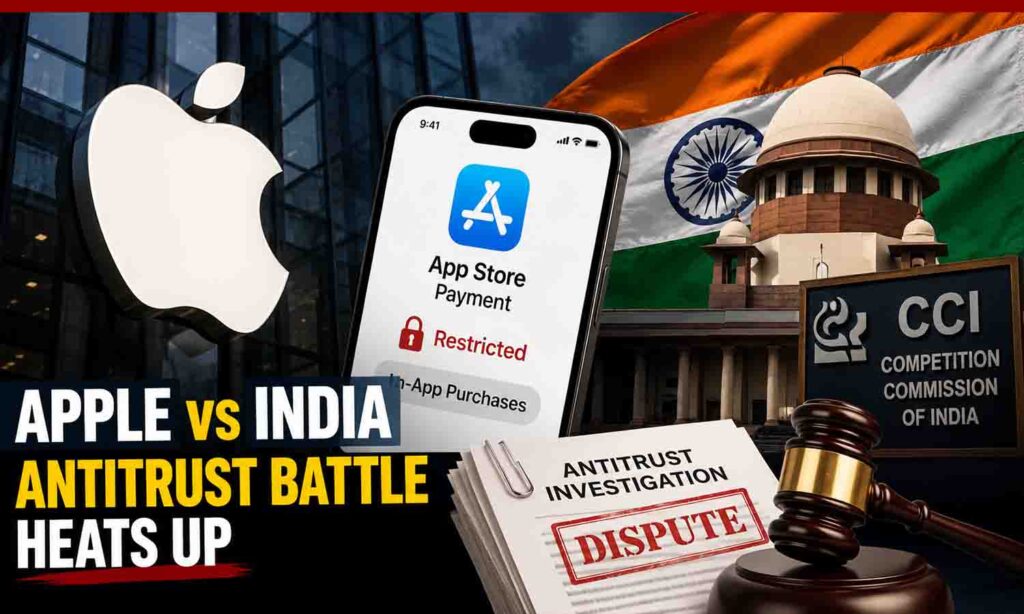
Apple has launched its strongest legal challenge yet against India’s competition regulator. The US based company claims investigators simply copied allegations from rivals instead of conducting an independent investigation. If Apple’s arguments fail, the outcome could reshape how the App Store operates in one of the world’s fastest-growing smartphone markets.
The Apple India antitrust case has become one of the biggest global competition battles in the tech industry, with potential consequences for developers, digital payments, and Apple’s long-term investment strategy in India.
Apple India Antitrust Case TOC
Why Is Apple Fighting the Competition Commission of India?
Apple has asked the Competition Commission of India (CCI) to dismiss the investigation’s findings, arguing that regulators relied heavily on complaints from competitors rather than conducting their own detailed market analysis.
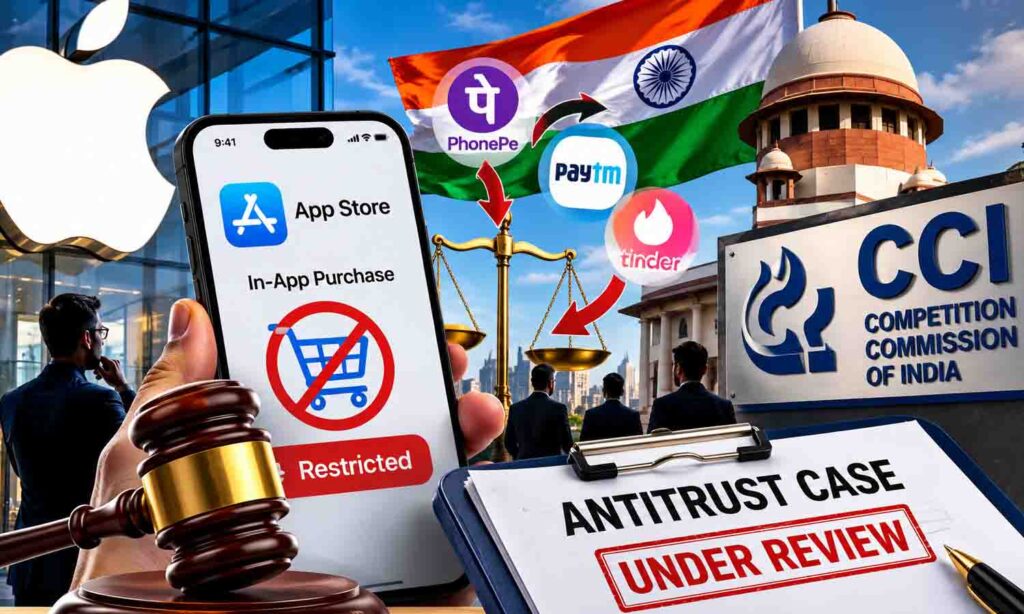
In its June 25 submission, Apple accused investigators of “copy-pasting” statements from companies including Match Group, PhonePe, and Paytm into the investigation report.
According to Apple, regulators failed to independently verify many of those claims before concluding that the App Store violated Indian competition law.
What Is the CCI Investigating?
The investigation centers on Apple’s App Store policies within iOS.
Regulators previously concluded that Apple may have abused its dominant position by:
- Requiring developers to use Apple’s payment system.
- Restricting alternative payment options.
- Potentially limiting competition inside the App Store ecosystem.
- Creating barriers for competing digital businesses.
Apple strongly denies those allegations.
Apple Says It Isn’t Dominant in India
One of Apple’s biggest arguments is surprisingly simple.
The company says it holds less than 6% of India’s smartphone market, making it a relatively small player compared to Android.
Apple argues that companies with such limited market share should not be treated as dominant under competition law.
This mirrors arguments Google previously made in its own Indian antitrust battle, although regulators ultimately rejected Google’s position.
Could Apple Face Massive Financial Penalties?
Yes.
India’s competition law allows regulators to impose penalties of up to 10% of relevant turnover in certain antitrust cases.
While the CCI hasn’t disclosed any potential fine, analysts believe penalties could reach millions of dollars if violations are confirmed.
Apple has already submitted its financial information covering fiscal years 2022 through 2024 for possible penalty calculations.
Apple Warns of Bigger Consequences
Apple argues the case isn’t only about fines.
The company says forcing changes to the App Store could:
- Create uncertainty for global investors.
- Reduce confidence in India’s digital economy.
- Disrupt Apple’s tightly integrated software ecosystem.
- Slow future technology investments.
Apple also highlighted that it has exported approximately $51 billion worth of iPhones from India over the past five years as it expands manufacturing beyond China.
India Has Become Apple’s Manufacturing Powerhouse
The timing of the investigation is particularly significant.
India is rapidly becoming Apple’s second manufacturing hub after China. According to Counterpoint Research, the country is expected to produce roughly 26% of the world’s iPhones in 2026, compared with just 6% four years ago.
That makes India strategically important not only for Apple’s sales but also for its global supply chain.
What Happens Next?
Senior officials from the Competition Commission of India are scheduled to hear arguments from all parties during a closed-door hearing on July 21.
After reviewing submissions from Apple, complainants, and investigators, the commission will determine whether Apple’s App Store practices violated Indian competition law and whether penalties or business changes are warranted.
Why This Matters for Developers, Investors, and AI Companies
This case extends far beyond Apple.
- App developers could gain more payment flexibility.
- Digital payment companies may receive greater access.
- Subscription businesses could lower transaction costs.
- AI startups distributing apps may benefit from fewer platform restrictions.
- Investors are closely watching how India regulates Big Tech.
The decision could influence future antitrust investigations involving other global technology companies.
Related Articles
- Apple’s Record Earnings Explained: What Tim Cook’s Exit Means for iPhone, AI & Investors
- Powerful Google Search Agent Monitors the Web 24/7
- Samsung One UI 9 Testing Just Expanded to More Galaxy Phones
Trusted Sources
Final Thoughts
The Apple India antitrust case could become one of the most influential technology regulatory decisions outside the United States and Europe.
If regulators rule against Apple, developers may gain greater freedom inside the App Store. If Apple prevails, it could strengthen the company’s argument that tightly integrated ecosystems benefit consumers.
Do you think Apple should be allowed to control App Store payments, or should developers have more freedom? Share your opinion in the comments below.
Frequently Asked Questions
Why is Apple under investigation in India?
The Competition Commission of India is investigating whether Apple abused its position by requiring developers to use its App Store payment system and restricting competition.
What is Apple’s defense?
Apple argues investigators relied heavily on competitors’ claims, failed to conduct independent analysis, and overlooked the company’s relatively small smartphone market share in India.
Can Apple be fined?
Yes. Under Indian competition law, penalties can reach up to 10% of relevant turnover, depending on the regulator’s final decision.
When will the next hearing take place?
Senior CCI officials are scheduled to hear arguments from all parties on July 21.
Why does this case matter globally?
The outcome could influence App Store regulations, developer payment rules, digital competition policy, and future antitrust actions against major technology companies worldwide.